
VRF/VRV Systems
VRF/VRV systems are the optimal air conditioning solution for large and medium buildings that need smart, energy-efficient central air conditioning
Overview
VRV & VRF Air Conditioning Systems - Central Cooling
What is a VRV/VRF Air Conditioning System?
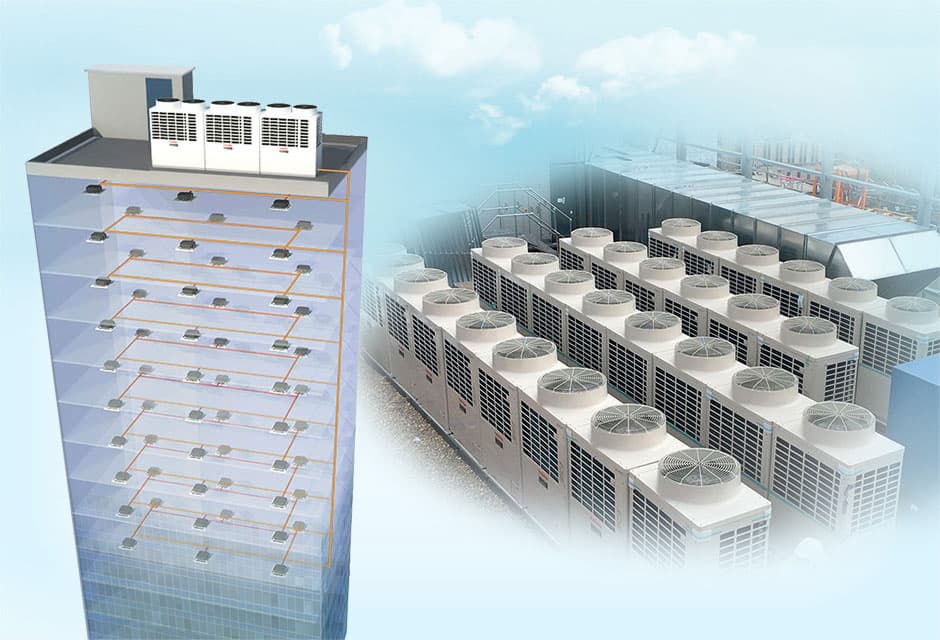
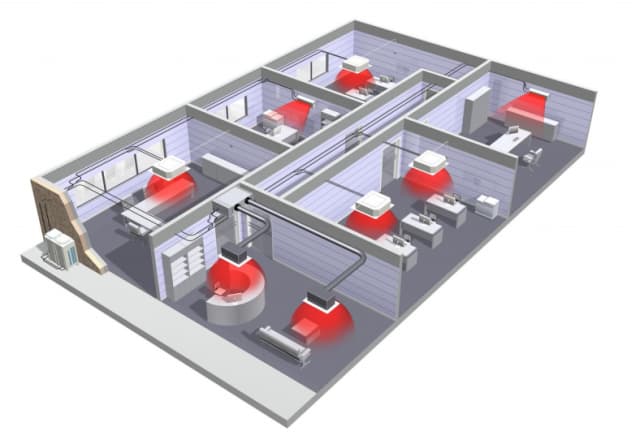
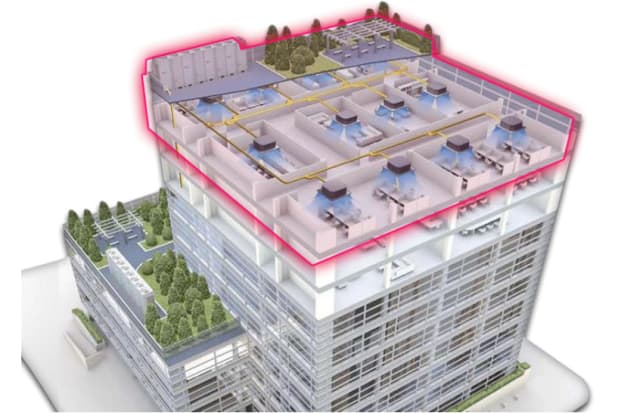
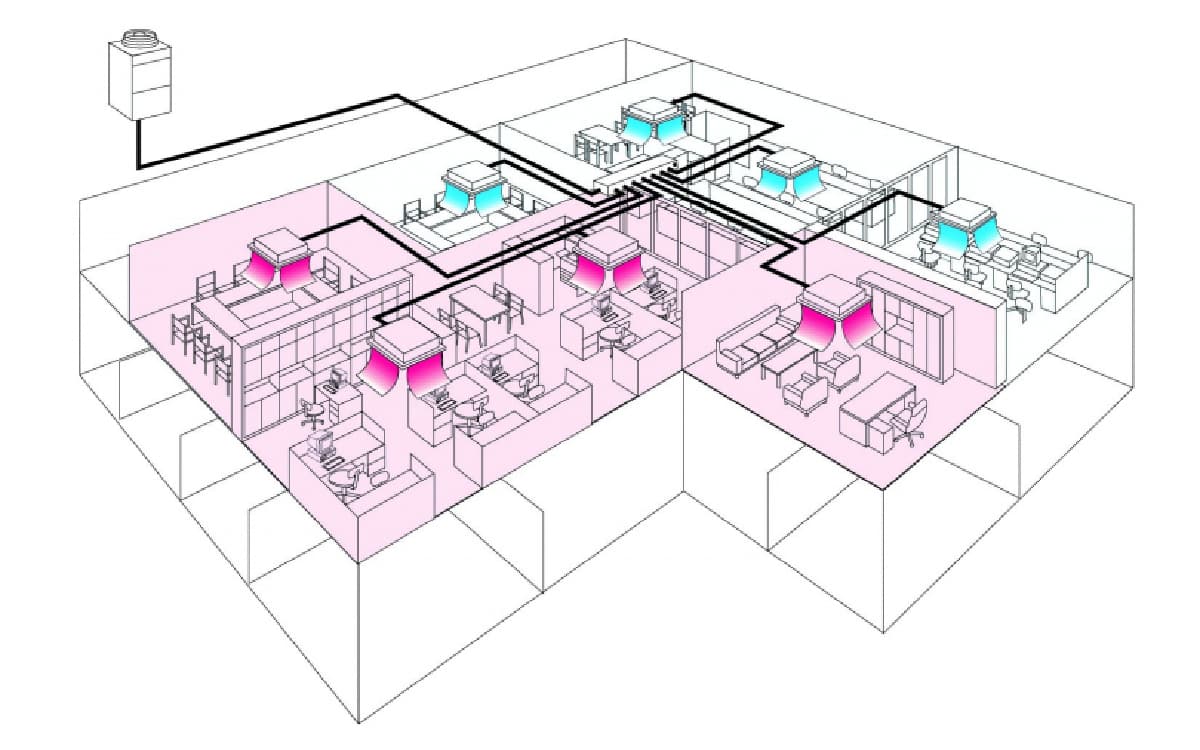
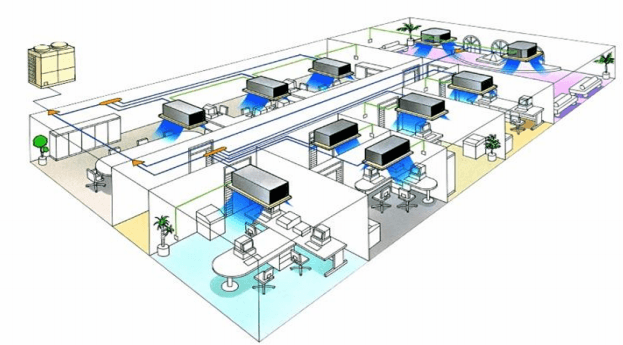
Variable Refrigerant Volume/Flow (VRV/VRF) is an advanced air conditioning system based on intelligent control of refrigerant flow according to actual cooling requirements. This system is characterized by its ability to connect multiple indoor units to one outdoor unit with separate control for each zone.
The terms VRV (Variable Refrigerant Volume) and VRF (Variable Refrigerant Flow) refer to essentially the same technology. VRV is the trade name first used by the Japanese company Daikin, while VRF is the general term used by other companies.
System Operation Mechanism
The system operates through an Inverter compressor that controls refrigerant flow based on actual thermal load. When room temperature changes, sensors send a signal to the controller (Inverter) which controls compressor speed, changing the refrigerant flow rate.
When temperature increases, refrigerant flow increases for more cooling; when temperature decreases, flow reduces to maintain desired temperature.
Types of VRV/VRF Systems
Systems differ based on heat recovery method and heat exchange nature, to choose the most suitable according to building type and needs.
Heat Pump System
Provides cooling and heating but not simultaneously.
Heat Recovery System
Allows simultaneous cooling and heating by transferring heat from cooled areas to areas needing heating. Suitable for administrative buildings, hotels, hospitals, offices, and residential towers.
Water Cooled System
Uses water instead of air to cool the condenser, increasing efficiency and reducing noise.
Key Benefits
Energy Saving
Saves up to 50% energy compared to traditional systems due to intelligent refrigerant flow control and compressor operation at appropriate speed only.
Design Flexibility
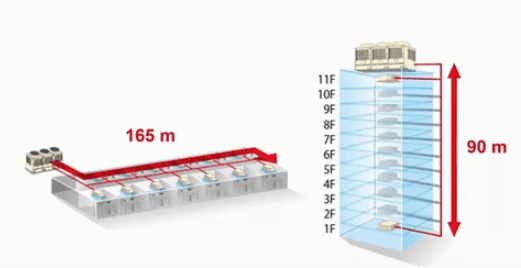
One outdoor unit can be connected to multiple indoor units (up to 64 units in some systems), with the possibility of using different indoor unit types (concealed, wall-mounted, ceiling).
Separate Control
Each indoor unit has independent temperature control, allowing cooling of specific areas and heating others simultaneously.
Space Saving
Reduces number of required outdoor units, saving space on rooftops and outdoor areas.
Quiet Operation
Outdoor units (containing noisy compressors) are placed outside the conditioned area.
Integration with Building Management Systems
Can be easily integrated with smart Building Management Systems (BMS) for centralized control and monitoring.
Suitable Applications
The variable air conditioning system is ideal for large and medium buildings needing smart, energy-efficient central air conditioning, including:
Installation Stages
VRV/VRF installation relies on precise network design and professional execution to ensure performance and efficiency.
Preliminary Design
Study building needs and design appropriate system.
Site Preparation
Prepare locations for outdoor and indoor units and pipe routes.
Installation
Install units and extend copper and pipe network.
Testing & Commissioning
System inspection, trial operation, and settings adjustment.
Handover & Maintenance
System handover to user and provision of periodic maintenance service.
Factors for Choosing Between Systems
When to Choose a VRV/VRF System?
- ✓When needing to cover large areas in one building
- ✓When wanting to save energy consumption long-term
- ✓When needing separate temperature control for each zone
- ✓When having sufficient budget for initial investment
- ✓When wanting a system that integrates with smart building management
⚠️ Important Notes
- System initial cost is high but compensates long-term through energy savings
- System requires specialized technicians for installation and maintenance
- System lifespan reaches 15-20 years with periodic maintenance
- System can be controlled remotely via phone or building management systems
Gallery
Explore Other Systems
Split Systems
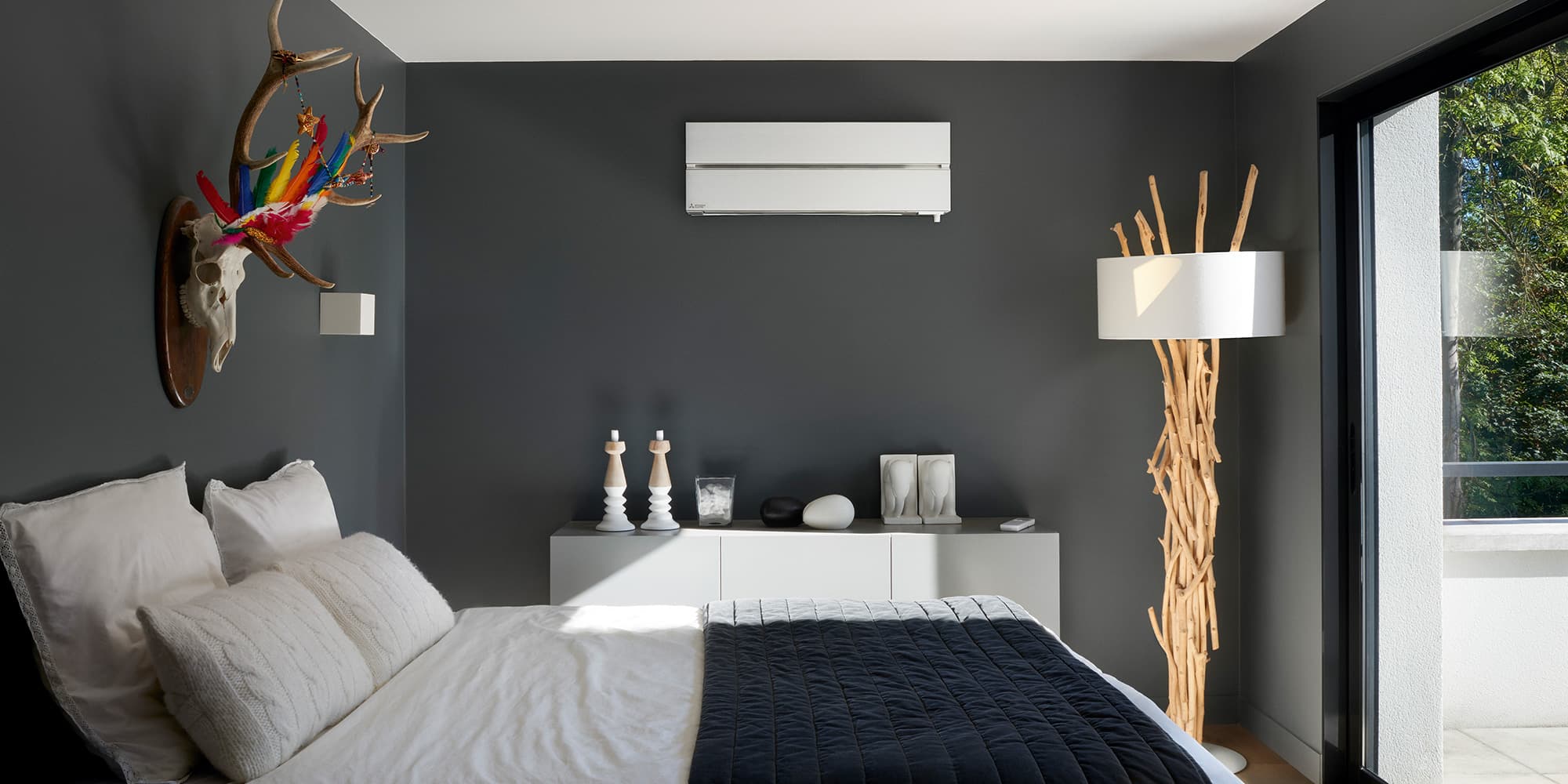
Split systems are efficient cooling and heating systems commonly used in homes and offices
Learn More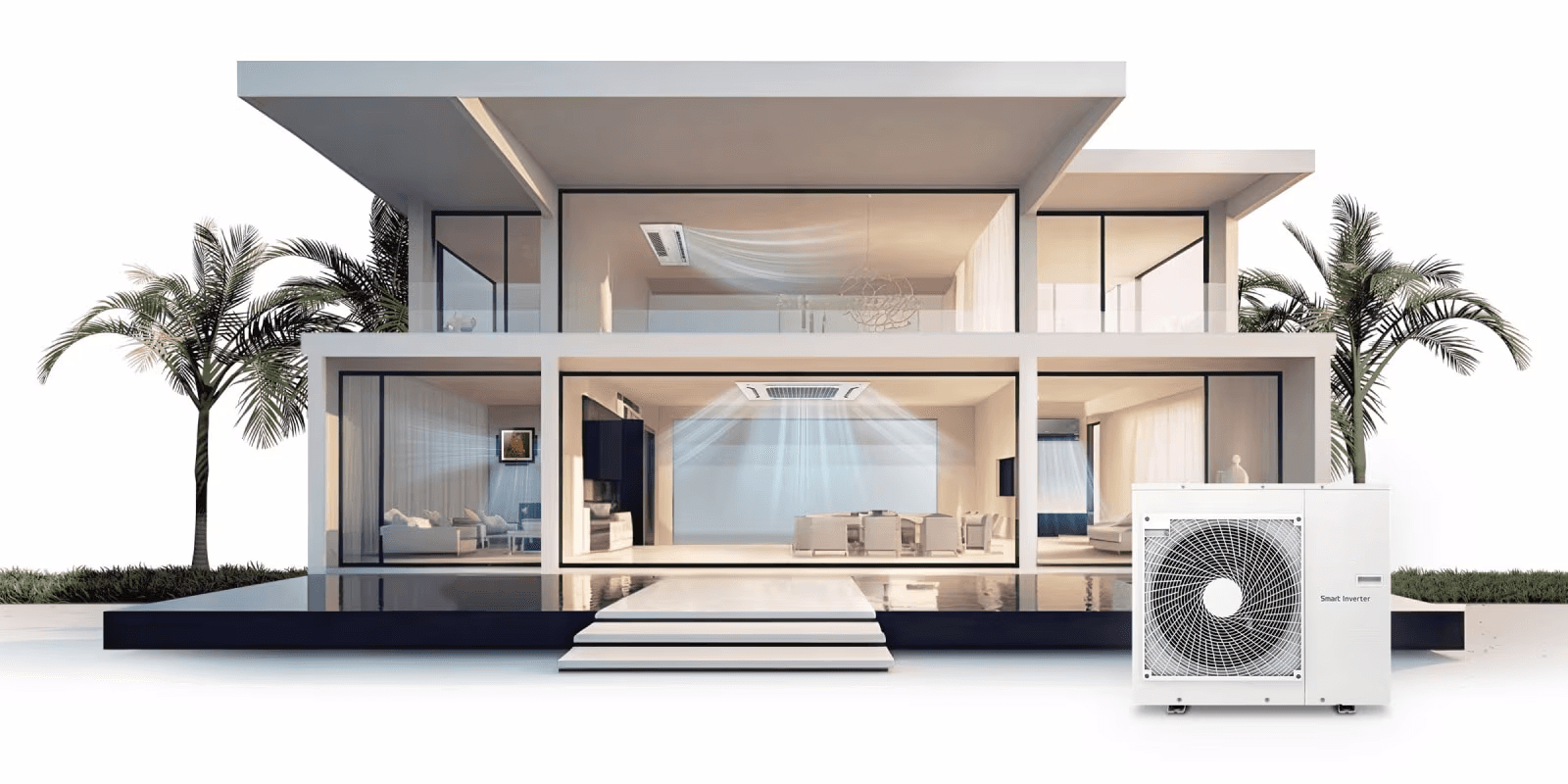
Multi Split Systems
One outdoor unit supplies multiple indoor units to provide zoned control and reduce the number of outdoor units.
Learn MoreVRF/VRV Systems
VRF/VRV systems are the optimal air conditioning solution for large and medium buildings that need smart, energy-efficient central air conditioning
Learn More